Tuesday, April 19, 2016

My Time at Tektronix in Vancouver

Right after graduate school, we moved to Vancouver, Washington.  There I worked for Tektronix in the Portable Test Instruments Division.  The Portable Test Instruments Division made low end oscilloscopes.  In Vancouver, I had a few experiences that helped me along my journey towards the goal of farming or homesteading, and raising high quality food for my family.

When we first moved to Vancouver, we lived in an apartment, just off of Highway 14, Camas Highway.  The apartment seemed large to us, but like most other apartments, lacked outdoor space.  In summer when the windows were open, the road noise was constant.  At this juncture in life, it seemed my farming and homesteading aspirations were largely limited to occasional readings from my then limited collection of books.

Shortly after starting working at Tektronix, I learned that the site where I worked had a community garden program where employees could use garden plots on the east side of the facility.  I excitedly signed up to utilize one of those garden plots.  The size of the plot was not large, probably 20' X 20'.  I thought that was kind of odd that a garden plot would be sized that small, but I decided to not complain.  We took advantage of the opportunity we had.  We planted tomatoes, potatoes, peas, lettuce, and a few other things.  Given that the garden was not right where we lived, it took specific effort to get to the garden and tend to it.  The garden was a modest success.  We enjoyed the food.  We enjoyed being able to take our daughter to the garden.  We enjoyed getting out and doing something productive, away from the apartment.


About a year after I started at Tektronix, my boss, John Jonez, decided to take a job with Tektronix in the UK.  He asked if we would be interested in renting his house while they were out of the country.  We worked on finangling our finances and decided that we could do that.  It was nice to move to a nice little three bedroom house with a front and backyard on a quiet street.  The backyard backed up to a green space, so no one lived directly behind us.  Although tall fir trees were along the east side of the back yard, there was adequate sunlight to grow a few garden vegetables.  Our favorite, and our oldest daughter's favorite was peas.  Kirsten wasn't walking at the time, but liked to crawl in the grass in the back yard and sit herself down by the pea vines.  I would sit with her and pop open the pea pods.  We would relish in the deliciousness of the fresh green peas.  As a child, I thought of them like candy.  Sitting in the back yard of John's house, eating fresh peas, I thought the same thing.  They are just like candy, only better.


While living in John's house, I found the Vancouver Library, and checked out a few books, primarily on farming, gardening, and homesteading.  One that caught my attention enough to check out and read was Edward Faulkner's Plowman's Folly.  Faulkner's book challenged the status quo in agriculture of the heavy iron practice of plowing with a moldboard plow.  He argued that not plowing was much better for the soil and would yield higher yields.  This struck me as curious, because I had contradictory experience.  

When I worked for Rawl, one of the fields where he grew and I irrigated silage corn had the top section of the field sold one year.  Rawl plowed and prepared the bottom section of the field for silage corn as usual.  Very late in the process, the new owner of the top section asked Rawl if he wanted to farm the part of the field that he had purchased.  Rawl said he did.  The timing was such that Rawl couldn't logistically plow the field, so he only disked and harrowed it.  The seedbed looked much the same.  The corn germinated just the same.  But as the summer wore on, that top section of the field was clearly stunted compared to the lower portion of the field.  As a teen, I thought that was curious, but never really developed a solid idea of why that happened.  The treatment throughout the field was exactly the same, except for the plowing.  

I wondered why Faulkner's idea contradicted my personal experience.  To this day, this is still a conundrum to me.  I wondered if Faulkner's idea was purely unscientific speculation.  Faulkner's idea has had the chance to ferment in my mind.  I have read many other books related to tillage, no-till, fertility associated with aeration of the soil, weed pressures from tillage or not, etc.  Overall, I am clear that plowing severely distrupts soil biology, but provides an imediate burst of plant nutrients from the decay of soil biota.  Constantly plowed soils degrade over time as the soil biology is exhausted.  I wonder if there is a balance that I would call minimum till, or perhaps periodic till.  Maybe I will get a chance to experiment with that.

My time in Vancouver created the opportunity to experience the challenges of gardening away from where I lived, and also to begin a more technical journey through soil science, as I took advange of the "internet of the late 80's," the local library.


Monday, March 7, 2016

Pacific Northwest - My Interview at Tektronix

As I came to my last semester in graduate school, the impending end of my student loan access, and the sense of impending responsibility associated with the sight of my pregnant wife encouraged my very serious search for employment.  I had several opportunities that I pursued.  It was in this window of time that I decided that I really must consider living outside of Utah.  Employment opportunities were few and salaries were depressed in Utah at the time.

Amongst other opportunties, I interviewed in Pennsylvania with Ford New Holland, the tractor and farm equipment manufacturer.  When I was there in Lancaster, Pennsylvania, I saw Amish people with their horse drawn buggies and carriages.  I was fascinated.

I intereviewed with Hillenbrand Industries in Indiana, in a sort of diversified medium size-ish conglomerate of sorts.  I never traveled to Indiana, but I looked up the local.  It was in the heart of mid-western farm country, where they grew "corn and beans," the staple commodities of conventional agriculture.  How would it be to have enough rain in the summer to not require irrigation?  I could only dream of that possibility.

I had the opportunity to interview with Tektronix.  Tektronix was headquartered in Beaverton, Oregon, but I intereviewed with a group that was in Vancouver, Washington, across the Columbia River from Portland.  I had been to Washington one time previously, when I was age seven.  We visited my aunt and uncle and their family in Seattle, or more precisely, Renton.  I didn't recall all that much from the trip of my childhood.

I flew into PDX, the Portland airport, in the evening and stayed at the Sheraton Inn, just a bit east of the main terminal on Airport Way.  As with all of my interviews, I was a bit nervous.  I fretted.  I reviewed my resume.  I practiced answers.  I anticipated questions.  Luckily, I never really had a hard time sleeping.  In the morning, I met the recruiter from Tektronix's HR department in the restaurant for breakfast.  For a poor college student, I had a breakfast of kings, scrambled eggs, hash browns, and bacon.  And a little more bacon.  And a glass or orange juice, or two.  Such was the luxury of having my meal paid for by the recruiting company.  We had our interview then packed up to drive to the plant in Vancouver for interviews with others in Finance in some of the oscilliscope and instrumentation divisions.

Shortly after getting onto I-205 northbound, we crossed the Columbia River.  I was jaw-dropped.  In Utah, the Weber River, or the Green River were giant rivers.  Each of those may have been 50 yards across, in the spring runoff season, if it was raining.  The Columbia river was approaching two miles wide at the I-205 bridge.  There was so much water.

We got off the freeway onto Highway 14 and headed east.  The houses became sparse, the trees, both conifers (firs) and deciduous (oaks and maples) were plentiful.  Along the edges of the woods, I noticed what looked like berry bushes.  As we pulled off the highway onto 164th Avenue, I saw more and more of the berry bushes.  I asked what they were.  Non-chalantly, the recruiter said they were wild blackberries, a literal thorn in the side to many residents and farmers.  Now the truth is that I loved berries and I love berries.  Yet, I had never had a blackberry.  I was surprised by the idea that these berries could just grow wild.  In effect, they would spontaneously spring forth and bear fruit.


The green was intense, even in February.  Having grown up in Utah, where the common color is a parched, dry-grass brown look, or perhaps dry grass and sage, intermingled with snow, the green was captivating.  My imagination went wild with the thought that other berries or other fruits and foods may also grow easily in the climate and soils of the area.  I became excited and enamoured with the idea of moving to the Portland area.


My interviews went well, particularly when I responded to questions with my experience and approach to managing the raspberry farm that I ran with some of my brothers in the mid-80's.  I was told that I was exceptionally animated and engaged when I talked about the raspberries, the market analysis, the financial analysis, and my passion for the product and the production of the product.

I returned home and excitedly told Michelle of what I had seen and how it felt.  Then the waiting started.  It's hard to be patient, when you are hopeful and ignorant at the same time.  In that waiting period, my first daughter was born and I completed school.  Then I got the call.  I was offered a job as a financial analyst in Tektronix's Personal Test Instruments Division.  I was ecstatic!

Maybe soon, we could buy some property and grow wild blackberries, and raspberries, and strawberries, and chickens....

Monday, January 4, 2016

Big Decision - PhD in Ag Econ or an MBA?

How does a decision regarding graduate school relate to farming?  Actually, there was quite a significant impact in my mind at the time.  In retrospect, I think the impact may have been different than I expected, but still significant.  Would a PhD in Ag Econ allow me to be closer to a situation where I could farm, or further away?  Would an MBA give me more practical insights into how to run a successful farm, either a hobby farm or a small business farm, or would it isolate me from any opportunity to farm?  These were among the considerations crossing my mind as an upperclassman at Utah State University.

During my junior year, my favorite professor, Bruce Godfrey, asked me to come see him in his office.  This was a little unusual.  I was a little nervous as I came to his smallish office and closed the dark stained oak door.  He asked me, "Have you ever considered getting a PhD in Ag Econ?"  Frankly, at that point in time, the idea of a PhD wasn't something I had considered.  I was intrigued.  Bruce mentioned that professors often encouraged promising students to pursue a PhD or other graduate degree.  I asked more about it.  He got his PhD at Oregon State University.  At that point in time, the idea of moving away from Utah wasn't something I had considered.  When I asked what schools would be good, he mentioned four schools: Texas A&M, Oregon State, Iowa State, and UC Davis.  Each of those sounded almost like a foreign country to me.  It was exciting to consider.

I wondered if getting a PhD would give me the opportunity to work in a relatively rural location, like Logan.  I wondered if I could work on agriculture related issues in an area where I could easily afford a few acres and do some of the things I had wanted to do since I was a wee little lad.  I also liked the managerial economics aspects of Ag Econ that supported farm based decision making.  Those things I thought would help me to make useful economic decisions on any farm I might have in the future.


Since Ag Econ had many finance and financial decision making tools, there was a lot of overlap with the School of Business.  I took many Finance courses as part of my required and elective class work.  I liked the Finance classes.  There were common reasons why I liked the Ag Econ classes and the Finance classes.  I liked the idea of running my own business.  I thought that Finance related classes offered more generally useful skills than Ag Econ classes.  I started wondering whether or not it might make sense to get a Master's degree in Finance, or an MBA with a Finance emphasis.  I began weighing and considering the pros, cons, and tradeoffs.

At a family event, I was able to get a few minutes with my Uncle Lowell to try to pick his brain on the topic at hand.  My uncle was a successful businessman in the Salt Lake City area.  What he actually did was, and is to this day, somewhat of a mystery to me. He did things in the realm of real estate and investing.  That is about all I understood of what he did.  I laid out my dilemna to him.  I asked him what he would think about and what factors he would suggest that I consider with regards to deciding between a PhD in Ag Econ and an MBA.  This was all very simple in his mind.  He said, "I would ask whether I preferred to spend four to six more years in school, going further into debt to earn very little, or more quickly get an MBA and start earning much more money right off the bat."  I was a little stunned.  He was pragmatic, but didn't seem to even comprehend or place importance on the nuances associated with being associated with agriculture.  I certainly did and do appreciate his candor and frankness.  That said, I still wrestled with the decision for several more months.

As I worked through the decision making process, the idea of having my own business pushed me towards an MBA.  I would be dishonest if I didn't say that concerns over the higher level math requirements associated with a PhD in Ag Econ didn't concern me.  Another thing that concerned me was the relatively open ended nature of a PhD program.  Was it three years, or six years, or five years?  Where could I work when I was done?  Could I come back to Logan, or would I have to find a job in Arkansas or Michigan, or some other place far from family?  Overall, the answers to these and other questions pushed me towards getting an MBA with a Finance emphasis.

It seemed to me that getting an MBA would not push me away from the farming I had dreamed about doing.  I would never accept a job in New York or Los Angeles, so I should be able to find a job somewhere where I could acquire a few acres and do the farming I had wanted to do for so long.

Wednesday, December 2, 2015

The Beginnings of My Internal Debate - Conventional vs. Organic Agriculture

In the scheme of things, this topic looms large in my mental framing.  My ideas on this have evolved and matured over time.  This post frames my initial awakening to the topic of the conventional vs. organic question.  You may recall from an earlier post that as a child of the 70's and the OPEC oil embargo, I saw self-sufficiency as a key issue and as an ideal.  In a very real sense, I considered what it would mean to live in that time frame with greatly reduced access to petroleum and petroleum products.  At that point in time, my thinking revolved around the idea regarding how we might gain the needed fertility and energy required for farming from source materials other than petroleum products.  This was not a consideration regarding which forms of fertility were better or worse, but simply a thought about replacements for required farming inputs.  In my junior year at USU, I took the next step, wondering whether or not organic agriculture could substitute for conventional chemical agriculture, evolving to whether or not there were other pros and cons for conventional vs. organic.  This protracted query was a jolt to my farming "worldview."

During my junior year at USU, I started considering the many potential avenues into developing some form of agricutural business and also, how to efficiently produce food for my family in an efficient manner and at a scale that was greater than the suburban backyard vegetable garden.  This query led me to several books in the USU library about market gardening.  Market gardening is the idea of growing vegetables at a relatively small scale to be sold primarily direct to customers and/or restaurants.  The large commercial analog is a "truck farm," which you may find in California's Central Valley.  My review of these market gardening books highlighted the idea of organic production methods and conventional production methods.  The idea that these two forms of production were not merely substitutes for one another was brought front and center in my mind.


A debate was forming in my mind about issues surrounding both fertility, weed control, and other pest control (e.g. insects, small mammals, etc.).  The questions of fertility initially developed around access to the macro nutrients of NPK (nitrogen, phosphorous, and potassium).  All of these could be had through both conventional fertilizers and organic fertilizers, although perhaps more easily measured and applied through conventional fertlizers.  As I studied, it became clear that there was a raft of micronutrients, known and unknown, that were more readily available through organic fertilizer sources, but not included in most conventional sources directly.  It also became clear that nutrients supplied through conventional fertilizers were much more leachable than those same nutrients provided through organic fertilizers.  That meant that the fertility could easily be swept out of the crop root zones.... and into our streams, rivers, lakes, and oceans.  I also learned that most conventional fertilizers were also based upon salt bases, gradually increasing the sodium and chlorine levels in the soil over time, leading to overall fertility declines.  A final additional thing that I learned related to the role of organic matter in soil structure and fertility reserves and the decline in organic matter in our soils over the 20th century in particular.  In effect, our soils were becoming a substrate to anchor the plants while being fed hydroponically the major nutrients that impacted plant growth and quantity yield.  I started to wonder if this really made sense.  Not only did conventional fertilizers require ongoing purchases on at least a yearly basis, but their regular usage led to a long-term decline in soil fertility.


I recalled spraying cockleburrs on Rawl's farm as a teen.  I had a tank of 2-4-D, wading through a sea of waist-high cockleburrs, sweeping the spraying wand from side to side, trying to get rid of what was probably 1/2 acre of cockleburrs.  I waded through the mist.  I breathed in the mist.  2-4-D was meant to kill broadleaf plants.  But I wondered, did it have any effect on me?  Since the government had approved 2-4-D for agricultural use, it must be okay, right?  I started reading about negative health consequences for farm workers exposed to pesticides and herbicides.  While these products seemed to have great ability to reduce labor, what were the other costs that were not usually discussed?  I thought about the Hughes's apple orchard down the street, which they sprayed religiously every 21 days during the summer.  How did people used to grow apples before pesticides?  It seemed that there was no way to grow fruit commercially without pesticides.  That couldn't be right..., so I thought.  What about Johnny Appleseed?  I read that pesiticides were systemic and not only applied to the surface of fruits and vegetables.  You could wash those vegetables as much as you wanted, but you couldn't wash out the portion that was absorbed into the tissues of the food.  Were those absorbed pesticides "safe enough?"  What did the research say?  I saw many holes and many open issues.  Intuitively, it seemed that there must be a better way.

I had a visit with  my favorite professor, Dr. Bruce Godfrey.  I explained my questions and concerns and wondered aloud whether or not organic or conventional was better.  In true Aristotitialan thinking, he said, the truth is probably somewhere in the middle.  There are pros and cons to each approach, and probably neither approach is completely correct in the way the questions and issues are discussed and presented.

At that point in time, I did not come to any specific conclusions.  I came to understand many of the questions, ideas, positions, and competing views.  It would take decades of reading and research for me to develop my current frame of thinking.  This was the beginning of the journey.

Wednesday, November 18, 2015

Choosing a Major - Agricultural Economics

As I worked my way through my sophomore year at Utah State, the need to choose a major became pressing.  I really wanted to be a farmer, but I had decided at the time that for economic reasons that was implausible.  I had briefly considered landscape architecture as I initially entered college, but determined that it was much more art than I had in my brain, hands, and body.  When I went back to college for my sophomore year, I had considered dairy science, but I wasn't sure where it might lead me since I didn't think I could ever afford to be a dairy farmer.  What could I do?  It weighed heavily on my mind.

During the Fall quarter, I took Econ 200, an introductory Macro Economics class.  It was one of those general requirement classes that looked like it might not be too boring.  Little did I know, that Michelle was in that class of about 150 people.  She sat in left front of the class and I sat in the right rear of the class.  I don't recall our paths ever having crossed, as we entered and exited through different doors.  At any rate, as I moved through the quarter, I became fascinated, intrigued, and even excited by the content of the materials.  The explanatory power of the models and theoretical constructs was intellectually stimulating.  I thirsted for more.  As I came to the close of that quarter and it became time to register for the next quarter, I wondered what might be next in the Econ series.  That would be Econ 201, Micro Economics.  It looked interesting.

In Econ 201, I not only met my wonderful wife, I also found that Micro Economics was even more interesting than Macro Economics to me.  It applied to individuals, firms, and businesses directly, whereas Macro Economics was more about the general economy of a society, country, or even the world.  I learned about how people made decisions, how companies made decisions, the impact of pricing decisions, product differentiation, commodity products, different business structures, etc.  As I was working at the USU dairy at the time, I started seeing farming applications to the concepts of Micro Economics.  I started to explore the idea of majoring in Economics.

To my surprise, as I looked through college majors, I found Agricultural Economics.  Could this be a way to meld my interest in both agriculture and economics?  I signed up for my first Ag Econ class in the Spring of my sophomore year.  The first class was basically Micro Economics for farms.  I was in love...  It was intriguing.  It was fascinating.  It gave me hope as I saw myself helping farmers figure out farming problems in a rational, logical, sensible way.  I saw myself helping myself, to someday, just maybe, find a way to profitably farm in a business-like way.  I was sold.  I finally selected Ag Econ as my major.


I enjoyed Ag Econ very much.  I did well in my classes.  In my junior year, I had two of my professors take me aside and start to coach me towards going to graduate school in Ag Econ.  I had not seriously considered graduate school to that point.  This would become something that I would think much about over the next year to 18 months.


As I studied Ag Econ, I turned the theoretical lessons into practical decision making in my mind at every turn.  Where would I use this concept?  How could this help me make a better decision than I might have otherwise?  How do you actually collect, gather, and analyze data to make meaningful decisions?  How does one capture value through the utility chain of the product to maximize profitability?  Where does farming start and end in the production and marketing of a product, or does it have to end?  How do you optimize fixed costs and automation vs. variable costs?  Very importantly, why commodity farming is difficult to do profitably and how and why to move away from commodities toward differentiated products.  I could go on and write a whole thesis on what I learned and how I changed my thinking about many things, but I will leave it at that for now.  I was at peace and happy with my choice of majors.  It fit.  It felt like me.

Sunday, November 1, 2015

Meeting Michelle - The Confession of Being a Farmer at Heart

At the start of the Winter Term after I returned to Utah State University, I ran into a former co-worker in my Microeconomics class.  She, Julianne (sp?) just happened to be in the class that I was taking.  She introduced me to her room mate, Michelle.  As we got into the class, the three of us decided to form a study group.  We would meet once or twice a week, particularly before tests, to review materials, and study for exams.


After two or three weeks, Julianne started missing our study sessions, except for right before exams.  That left Michelle and me alone, wondering whether or not Julianne was going to show up.  Not wanting to start studying without Julianne, we found ourselves talking and talking and talking.  It didn't take too many of those sessions before I decided that I really wanted to get to know her better. I got up the best courage I could muster, and in a light-hearted sort of way, asked her if she had ever seen Monty Python and the Holy Grail.  Amazingly to me, she had never seen it.  I had noted that it was at the midnight movie on the upcoming weekend and asked her if she would like to see it with me.  Always hopeful of a "yes," but prepared to deal with a no, I had asked.  She accepted! 


I don't recall all of the details of the evening.  I had worked that night at the dairy farm, so I had to get cleaned up before picking her up for the movie.  The fact that I had to work is one of the things that pushed me to the midnight movie.  I do recall we had a very good time and we had both agreed, that "we would have to do something together again the next week."  And as they say, the rest is history....  We were married about seven months later, not uncommon by Utah standards at that place and time.

I remember in one of our very first conversations, I had mentioned that I worked at the USU dairy farm.  Michelle had half-seriously asked me if I could get her a job there.  Being a poor college student, she was looking for a way to possibly earn additional income.  From there we talked about my history working for Rawl, and my desire to be a farmer.  We discussed that I didn't think it was in the cards for me to be a full-time commercial farmer due to economic constraints and my view of the world at that point in time.  We had discussed my hopes and dreams that I had had from the time I was a little child to be self-sufficient and raise as much of my own food as possible.   We discussed many of the ideas that I had developed over time.  To my happy amazement, she did not reject me or my pursuit of her, even with full-disclosure, sort of a confession if you will, about my farming hopes and dreams.

Michelle mentioned that her granparents had a farm where they grew beef and a big garden every year.  She mentioned how she had loved to go there during the summer and eat the fresh food, and look out over the pasture from the deck and the backyard.  She enjoyed her experiences there and seemed to be okay with my eccentric interests.  

I became increasingly comfortable with my time with Michelle.  She accepted me, warts and all, with my odd interests, and personality quirks.  It wasn't too long before we noted how much we enjoyed spending time with each other.  We also noted those "sparks" that were there between us.  I soon found myself wanting to spend forever with her.  At a moment of conversation, she had mentioned something to the effect that there were different things that we wanted to do together.  In response, I said, "Well, then you will just have to marry me."  She said something to the effect of, "I guess so..."  Not wanting to unwind the moment, we moved on in conversation.  It would take just a little more time for us to formalize our arrangement, but that was the beginning of the formalization.

I continued to want to be able to raise high quality food for the health of Michelle and the rest of our family as part of my core driver towards wanting to farm.  Over time, I would learn more about why I would want to do that.  

I consider myself to be supremely lucky and honored that Michelle would choose to spend her life with me.  I am thankful she accepted me and continues to accept me today.  I feel like the luckiest guy in the world.


Wednesday, September 30, 2015

USU Dairy Farm Employment

For two school terms after my mission, I lived at my parents' home and attended Weber State College in Ogden.  After the following summer was completed, I transfered back, and headed up to Logan to attend Utah State University.  I certainly didn't have enough money to make it through the school year, so I set my sights on getting a job as soon as possible.

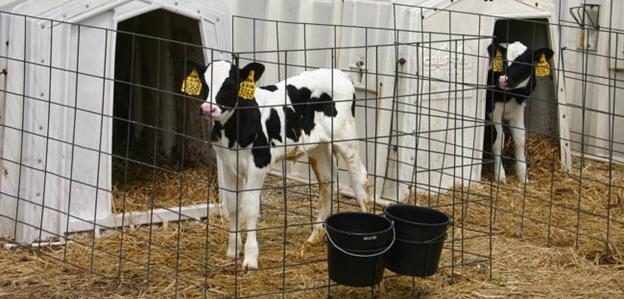
About a week after I got there, I applied for and obtained a milking job in Richmond.  It was about a 30-40 minute drive from my apartment.  It was a pretty long trip.  I was hoping for something closer to home than that.  I was taking an introductory dairy science class, when the teacher (and farm manager), Ron Bowman, mentioned that he had a position open at the school dairy farm.  I quickly applied for whatever position it might be.  It just so happened that I would be feeding the calves at the school dairy farm, as well as moving pens of cows to and from the milking parlor.  I was hired, and I was back to where I started with Rawl, feeding calves.  Instead of 10-15 calves to care for, I would have 40-50 calves to care for, as well as keeping the milking parlor stocked with cows to milk.


My schedule was from 3:30 to 8:00, roughly.  That could be either a.m. or p.m.  I probably split about 50/50 between the morning and afternoon shifts.  To this day, I still get up at 4:00 a.m.  Funny how that works...

At the dairy farm, I saw a learned many things, some good, and some not so good in my estimation.  The USU dairy has long been a top school in the country for dairy science.  The farm supplied milk to the Food Science department, which had a small dairy processing plant.  The most notable output of that plant was the famed "Aggie Ice Cream."  Fantastic stuff that is.

On the farm, I saw experiments with feeding, rumination, embryo flushing and others.  One of the things I saw, which helped me develop my own ideals and philosophy surrounding feeding related to fact that feeding cows, which are ruminants, large amounts of grain created an overly acid rumen (first stomach) environment.  This acid environment led to many health problems and low butterfat production.  The long-term experiment included mixing in various levels of sodium bicarbinate (a pH buffer) into the feed to determine the impact on production and some other parameters that I was not privy to.  These high grain, high energy diets were part of the path to high production dairying with the Holy Grail being a herd of Holstein cattle that had an average annual per cow production of 20,000 pounds or more of milk.  Let's put that in perspective.  That much milk is about 2,326 gallons of milk.  A cow lactates about 305 days out of a 365 day year, so that is 7.6 gallons a day.

One of the implications of this high production environment was that the cows burned out very quickly.  Cows often only lasted two to three lactations, then became ill or infertile.  At Rawl's more holistic farm, he saw average annual production of about 14,000 to 15,000 pounds of milk per cow.  When I was working for Rawl, he had one cow that was 20 years old and had had 18 calves in her life.  He had another cow that was the butterfat yield champion of the county and was 18 years old, having 16 calves in her life.  The average age of Rawl's cows was just over ten years old.  What I saw at USU compared to Rawl's farm led me to question the efficiency of the high yield model.  Just as important, it caused me to question the ethics of the high yield model.  Later in life, as I studied both human and cattle nutrition, it became clear to me that cows eating diets intended for ruminants (hay and other forage, not grain) produce milk that is of higher quality for human consumption and human health as well.  That will be a future topic to discuss.

I was grateful for the opportunity to continue to work with cows and for employment.  I continued to work at the USU dairy farm for about two years or so.  For the first year, I was largely in charge of the calves.  After the first year, I started milking as well.  With the employment, I was able provide for myself and pay for college.  I was able to get married and support my family in a very meager, but acceptable way.  I was also able to learn things that have helped to form my views of proper farming and how to grow excellent food, excellently.