Monday, January 4, 2016

Big Decision - PhD in Ag Econ or an MBA?

How does a decision regarding graduate school relate to farming?  Actually, there was quite a significant impact in my mind at the time.  In retrospect, I think the impact may have been different than I expected, but still significant.  Would a PhD in Ag Econ allow me to be closer to a situation where I could farm, or further away?  Would an MBA give me more practical insights into how to run a successful farm, either a hobby farm or a small business farm, or would it isolate me from any opportunity to farm?  These were among the considerations crossing my mind as an upperclassman at Utah State University.

During my junior year, my favorite professor, Bruce Godfrey, asked me to come see him in his office.  This was a little unusual.  I was a little nervous as I came to his smallish office and closed the dark stained oak door.  He asked me, "Have you ever considered getting a PhD in Ag Econ?"  Frankly, at that point in time, the idea of a PhD wasn't something I had considered.  I was intrigued.  Bruce mentioned that professors often encouraged promising students to pursue a PhD or other graduate degree.  I asked more about it.  He got his PhD at Oregon State University.  At that point in time, the idea of moving away from Utah wasn't something I had considered.  When I asked what schools would be good, he mentioned four schools: Texas A&M, Oregon State, Iowa State, and UC Davis.  Each of those sounded almost like a foreign country to me.  It was exciting to consider.

I wondered if getting a PhD would give me the opportunity to work in a relatively rural location, like Logan.  I wondered if I could work on agriculture related issues in an area where I could easily afford a few acres and do some of the things I had wanted to do since I was a wee little lad.  I also liked the managerial economics aspects of Ag Econ that supported farm based decision making.  Those things I thought would help me to make useful economic decisions on any farm I might have in the future.


Since Ag Econ had many finance and financial decision making tools, there was a lot of overlap with the School of Business.  I took many Finance courses as part of my required and elective class work.  I liked the Finance classes.  There were common reasons why I liked the Ag Econ classes and the Finance classes.  I liked the idea of running my own business.  I thought that Finance related classes offered more generally useful skills than Ag Econ classes.  I started wondering whether or not it might make sense to get a Master's degree in Finance, or an MBA with a Finance emphasis.  I began weighing and considering the pros, cons, and tradeoffs.

At a family event, I was able to get a few minutes with my Uncle Lowell to try to pick his brain on the topic at hand.  My uncle was a successful businessman in the Salt Lake City area.  What he actually did was, and is to this day, somewhat of a mystery to me. He did things in the realm of real estate and investing.  That is about all I understood of what he did.  I laid out my dilemna to him.  I asked him what he would think about and what factors he would suggest that I consider with regards to deciding between a PhD in Ag Econ and an MBA.  This was all very simple in his mind.  He said, "I would ask whether I preferred to spend four to six more years in school, going further into debt to earn very little, or more quickly get an MBA and start earning much more money right off the bat."  I was a little stunned.  He was pragmatic, but didn't seem to even comprehend or place importance on the nuances associated with being associated with agriculture.  I certainly did and do appreciate his candor and frankness.  That said, I still wrestled with the decision for several more months.

As I worked through the decision making process, the idea of having my own business pushed me towards an MBA.  I would be dishonest if I didn't say that concerns over the higher level math requirements associated with a PhD in Ag Econ didn't concern me.  Another thing that concerned me was the relatively open ended nature of a PhD program.  Was it three years, or six years, or five years?  Where could I work when I was done?  Could I come back to Logan, or would I have to find a job in Arkansas or Michigan, or some other place far from family?  Overall, the answers to these and other questions pushed me towards getting an MBA with a Finance emphasis.

It seemed to me that getting an MBA would not push me away from the farming I had dreamed about doing.  I would never accept a job in New York or Los Angeles, so I should be able to find a job somewhere where I could acquire a few acres and do the farming I had wanted to do for so long.

Wednesday, December 2, 2015

The Beginnings of My Internal Debate - Conventional vs. Organic Agriculture

In the scheme of things, this topic looms large in my mental framing.  My ideas on this have evolved and matured over time.  This post frames my initial awakening to the topic of the conventional vs. organic question.  You may recall from an earlier post that as a child of the 70's and the OPEC oil embargo, I saw self-sufficiency as a key issue and as an ideal.  In a very real sense, I considered what it would mean to live in that time frame with greatly reduced access to petroleum and petroleum products.  At that point in time, my thinking revolved around the idea regarding how we might gain the needed fertility and energy required for farming from source materials other than petroleum products.  This was not a consideration regarding which forms of fertility were better or worse, but simply a thought about replacements for required farming inputs.  In my junior year at USU, I took the next step, wondering whether or not organic agriculture could substitute for conventional chemical agriculture, evolving to whether or not there were other pros and cons for conventional vs. organic.  This protracted query was a jolt to my farming "worldview."

During my junior year at USU, I started considering the many potential avenues into developing some form of agricutural business and also, how to efficiently produce food for my family in an efficient manner and at a scale that was greater than the suburban backyard vegetable garden.  This query led me to several books in the USU library about market gardening.  Market gardening is the idea of growing vegetables at a relatively small scale to be sold primarily direct to customers and/or restaurants.  The large commercial analog is a "truck farm," which you may find in California's Central Valley.  My review of these market gardening books highlighted the idea of organic production methods and conventional production methods.  The idea that these two forms of production were not merely substitutes for one another was brought front and center in my mind.


A debate was forming in my mind about issues surrounding both fertility, weed control, and other pest control (e.g. insects, small mammals, etc.).  The questions of fertility initially developed around access to the macro nutrients of NPK (nitrogen, phosphorous, and potassium).  All of these could be had through both conventional fertilizers and organic fertilizers, although perhaps more easily measured and applied through conventional fertlizers.  As I studied, it became clear that there was a raft of micronutrients, known and unknown, that were more readily available through organic fertilizer sources, but not included in most conventional sources directly.  It also became clear that nutrients supplied through conventional fertilizers were much more leachable than those same nutrients provided through organic fertilizers.  That meant that the fertility could easily be swept out of the crop root zones.... and into our streams, rivers, lakes, and oceans.  I also learned that most conventional fertilizers were also based upon salt bases, gradually increasing the sodium and chlorine levels in the soil over time, leading to overall fertility declines.  A final additional thing that I learned related to the role of organic matter in soil structure and fertility reserves and the decline in organic matter in our soils over the 20th century in particular.  In effect, our soils were becoming a substrate to anchor the plants while being fed hydroponically the major nutrients that impacted plant growth and quantity yield.  I started to wonder if this really made sense.  Not only did conventional fertilizers require ongoing purchases on at least a yearly basis, but their regular usage led to a long-term decline in soil fertility.


I recalled spraying cockleburrs on Rawl's farm as a teen.  I had a tank of 2-4-D, wading through a sea of waist-high cockleburrs, sweeping the spraying wand from side to side, trying to get rid of what was probably 1/2 acre of cockleburrs.  I waded through the mist.  I breathed in the mist.  2-4-D was meant to kill broadleaf plants.  But I wondered, did it have any effect on me?  Since the government had approved 2-4-D for agricultural use, it must be okay, right?  I started reading about negative health consequences for farm workers exposed to pesticides and herbicides.  While these products seemed to have great ability to reduce labor, what were the other costs that were not usually discussed?  I thought about the Hughes's apple orchard down the street, which they sprayed religiously every 21 days during the summer.  How did people used to grow apples before pesticides?  It seemed that there was no way to grow fruit commercially without pesticides.  That couldn't be right..., so I thought.  What about Johnny Appleseed?  I read that pesiticides were systemic and not only applied to the surface of fruits and vegetables.  You could wash those vegetables as much as you wanted, but you couldn't wash out the portion that was absorbed into the tissues of the food.  Were those absorbed pesticides "safe enough?"  What did the research say?  I saw many holes and many open issues.  Intuitively, it seemed that there must be a better way.

I had a visit with  my favorite professor, Dr. Bruce Godfrey.  I explained my questions and concerns and wondered aloud whether or not organic or conventional was better.  In true Aristotitialan thinking, he said, the truth is probably somewhere in the middle.  There are pros and cons to each approach, and probably neither approach is completely correct in the way the questions and issues are discussed and presented.

At that point in time, I did not come to any specific conclusions.  I came to understand many of the questions, ideas, positions, and competing views.  It would take decades of reading and research for me to develop my current frame of thinking.  This was the beginning of the journey.

Wednesday, November 18, 2015

Choosing a Major - Agricultural Economics

As I worked my way through my sophomore year at Utah State, the need to choose a major became pressing.  I really wanted to be a farmer, but I had decided at the time that for economic reasons that was implausible.  I had briefly considered landscape architecture as I initially entered college, but determined that it was much more art than I had in my brain, hands, and body.  When I went back to college for my sophomore year, I had considered dairy science, but I wasn't sure where it might lead me since I didn't think I could ever afford to be a dairy farmer.  What could I do?  It weighed heavily on my mind.

During the Fall quarter, I took Econ 200, an introductory Macro Economics class.  It was one of those general requirement classes that looked like it might not be too boring.  Little did I know, that Michelle was in that class of about 150 people.  She sat in left front of the class and I sat in the right rear of the class.  I don't recall our paths ever having crossed, as we entered and exited through different doors.  At any rate, as I moved through the quarter, I became fascinated, intrigued, and even excited by the content of the materials.  The explanatory power of the models and theoretical constructs was intellectually stimulating.  I thirsted for more.  As I came to the close of that quarter and it became time to register for the next quarter, I wondered what might be next in the Econ series.  That would be Econ 201, Micro Economics.  It looked interesting.

In Econ 201, I not only met my wonderful wife, I also found that Micro Economics was even more interesting than Macro Economics to me.  It applied to individuals, firms, and businesses directly, whereas Macro Economics was more about the general economy of a society, country, or even the world.  I learned about how people made decisions, how companies made decisions, the impact of pricing decisions, product differentiation, commodity products, different business structures, etc.  As I was working at the USU dairy at the time, I started seeing farming applications to the concepts of Micro Economics.  I started to explore the idea of majoring in Economics.

To my surprise, as I looked through college majors, I found Agricultural Economics.  Could this be a way to meld my interest in both agriculture and economics?  I signed up for my first Ag Econ class in the Spring of my sophomore year.  The first class was basically Micro Economics for farms.  I was in love...  It was intriguing.  It was fascinating.  It gave me hope as I saw myself helping farmers figure out farming problems in a rational, logical, sensible way.  I saw myself helping myself, to someday, just maybe, find a way to profitably farm in a business-like way.  I was sold.  I finally selected Ag Econ as my major.


I enjoyed Ag Econ very much.  I did well in my classes.  In my junior year, I had two of my professors take me aside and start to coach me towards going to graduate school in Ag Econ.  I had not seriously considered graduate school to that point.  This would become something that I would think much about over the next year to 18 months.


As I studied Ag Econ, I turned the theoretical lessons into practical decision making in my mind at every turn.  Where would I use this concept?  How could this help me make a better decision than I might have otherwise?  How do you actually collect, gather, and analyze data to make meaningful decisions?  How does one capture value through the utility chain of the product to maximize profitability?  Where does farming start and end in the production and marketing of a product, or does it have to end?  How do you optimize fixed costs and automation vs. variable costs?  Very importantly, why commodity farming is difficult to do profitably and how and why to move away from commodities toward differentiated products.  I could go on and write a whole thesis on what I learned and how I changed my thinking about many things, but I will leave it at that for now.  I was at peace and happy with my choice of majors.  It fit.  It felt like me.

Sunday, November 1, 2015

Meeting Michelle - The Confession of Being a Farmer at Heart

At the start of the Winter Term after I returned to Utah State University, I ran into a former co-worker in my Microeconomics class.  She, Julianne (sp?) just happened to be in the class that I was taking.  She introduced me to her room mate, Michelle.  As we got into the class, the three of us decided to form a study group.  We would meet once or twice a week, particularly before tests, to review materials, and study for exams.


After two or three weeks, Julianne started missing our study sessions, except for right before exams.  That left Michelle and me alone, wondering whether or not Julianne was going to show up.  Not wanting to start studying without Julianne, we found ourselves talking and talking and talking.  It didn't take too many of those sessions before I decided that I really wanted to get to know her better. I got up the best courage I could muster, and in a light-hearted sort of way, asked her if she had ever seen Monty Python and the Holy Grail.  Amazingly to me, she had never seen it.  I had noted that it was at the midnight movie on the upcoming weekend and asked her if she would like to see it with me.  Always hopeful of a "yes," but prepared to deal with a no, I had asked.  She accepted! 


I don't recall all of the details of the evening.  I had worked that night at the dairy farm, so I had to get cleaned up before picking her up for the movie.  The fact that I had to work is one of the things that pushed me to the midnight movie.  I do recall we had a very good time and we had both agreed, that "we would have to do something together again the next week."  And as they say, the rest is history....  We were married about seven months later, not uncommon by Utah standards at that place and time.

I remember in one of our very first conversations, I had mentioned that I worked at the USU dairy farm.  Michelle had half-seriously asked me if I could get her a job there.  Being a poor college student, she was looking for a way to possibly earn additional income.  From there we talked about my history working for Rawl, and my desire to be a farmer.  We discussed that I didn't think it was in the cards for me to be a full-time commercial farmer due to economic constraints and my view of the world at that point in time.  We had discussed my hopes and dreams that I had had from the time I was a little child to be self-sufficient and raise as much of my own food as possible.   We discussed many of the ideas that I had developed over time.  To my happy amazement, she did not reject me or my pursuit of her, even with full-disclosure, sort of a confession if you will, about my farming hopes and dreams.

Michelle mentioned that her granparents had a farm where they grew beef and a big garden every year.  She mentioned how she had loved to go there during the summer and eat the fresh food, and look out over the pasture from the deck and the backyard.  She enjoyed her experiences there and seemed to be okay with my eccentric interests.  

I became increasingly comfortable with my time with Michelle.  She accepted me, warts and all, with my odd interests, and personality quirks.  It wasn't too long before we noted how much we enjoyed spending time with each other.  We also noted those "sparks" that were there between us.  I soon found myself wanting to spend forever with her.  At a moment of conversation, she had mentioned something to the effect that there were different things that we wanted to do together.  In response, I said, "Well, then you will just have to marry me."  She said something to the effect of, "I guess so..."  Not wanting to unwind the moment, we moved on in conversation.  It would take just a little more time for us to formalize our arrangement, but that was the beginning of the formalization.

I continued to want to be able to raise high quality food for the health of Michelle and the rest of our family as part of my core driver towards wanting to farm.  Over time, I would learn more about why I would want to do that.  

I consider myself to be supremely lucky and honored that Michelle would choose to spend her life with me.  I am thankful she accepted me and continues to accept me today.  I feel like the luckiest guy in the world.


Wednesday, September 30, 2015

USU Dairy Farm Employment

For two school terms after my mission, I lived at my parents' home and attended Weber State College in Ogden.  After the following summer was completed, I transfered back, and headed up to Logan to attend Utah State University.  I certainly didn't have enough money to make it through the school year, so I set my sights on getting a job as soon as possible.

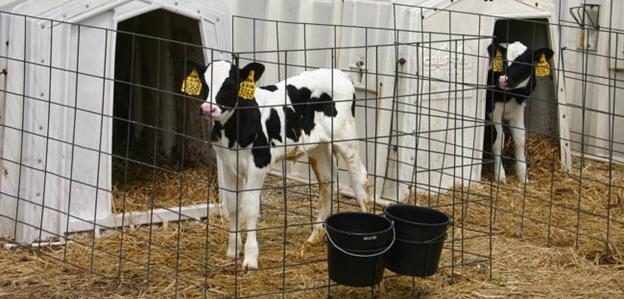
About a week after I got there, I applied for and obtained a milking job in Richmond.  It was about a 30-40 minute drive from my apartment.  It was a pretty long trip.  I was hoping for something closer to home than that.  I was taking an introductory dairy science class, when the teacher (and farm manager), Ron Bowman, mentioned that he had a position open at the school dairy farm.  I quickly applied for whatever position it might be.  It just so happened that I would be feeding the calves at the school dairy farm, as well as moving pens of cows to and from the milking parlor.  I was hired, and I was back to where I started with Rawl, feeding calves.  Instead of 10-15 calves to care for, I would have 40-50 calves to care for, as well as keeping the milking parlor stocked with cows to milk.


My schedule was from 3:30 to 8:00, roughly.  That could be either a.m. or p.m.  I probably split about 50/50 between the morning and afternoon shifts.  To this day, I still get up at 4:00 a.m.  Funny how that works...

At the dairy farm, I saw a learned many things, some good, and some not so good in my estimation.  The USU dairy has long been a top school in the country for dairy science.  The farm supplied milk to the Food Science department, which had a small dairy processing plant.  The most notable output of that plant was the famed "Aggie Ice Cream."  Fantastic stuff that is.

On the farm, I saw experiments with feeding, rumination, embryo flushing and others.  One of the things I saw, which helped me develop my own ideals and philosophy surrounding feeding related to fact that feeding cows, which are ruminants, large amounts of grain created an overly acid rumen (first stomach) environment.  This acid environment led to many health problems and low butterfat production.  The long-term experiment included mixing in various levels of sodium bicarbinate (a pH buffer) into the feed to determine the impact on production and some other parameters that I was not privy to.  These high grain, high energy diets were part of the path to high production dairying with the Holy Grail being a herd of Holstein cattle that had an average annual per cow production of 20,000 pounds or more of milk.  Let's put that in perspective.  That much milk is about 2,326 gallons of milk.  A cow lactates about 305 days out of a 365 day year, so that is 7.6 gallons a day.

One of the implications of this high production environment was that the cows burned out very quickly.  Cows often only lasted two to three lactations, then became ill or infertile.  At Rawl's more holistic farm, he saw average annual production of about 14,000 to 15,000 pounds of milk per cow.  When I was working for Rawl, he had one cow that was 20 years old and had had 18 calves in her life.  He had another cow that was the butterfat yield champion of the county and was 18 years old, having 16 calves in her life.  The average age of Rawl's cows was just over ten years old.  What I saw at USU compared to Rawl's farm led me to question the efficiency of the high yield model.  Just as important, it caused me to question the ethics of the high yield model.  Later in life, as I studied both human and cattle nutrition, it became clear to me that cows eating diets intended for ruminants (hay and other forage, not grain) produce milk that is of higher quality for human consumption and human health as well.  That will be a future topic to discuss.

I was grateful for the opportunity to continue to work with cows and for employment.  I continued to work at the USU dairy farm for about two years or so.  For the first year, I was largely in charge of the calves.  After the first year, I started milking as well.  With the employment, I was able provide for myself and pay for college.  I was able to get married and support my family in a very meager, but acceptable way.  I was also able to learn things that have helped to form my views of proper farming and how to grow excellent food, excellently.

Wednesday, August 26, 2015

Could I Ever Afford to be a Farmer?

Farming can be very capital intensive.  Said another way, you may very well need to have a lot of money up front to start farming.  When I was in college, this idea haunted me.  I really wanted to farm, but was it even possible?  How could someone with a net worth of approximately $500 and no income stream to speak of afford to buy property, buildings, equipment, animals, and supplies to begin farming?


To a great degree, I was trapped by a rigid mental paradigm from which I could not break free.  I had the idea that I needed to buy all of these things to start farming.  I had the idea that the only way I could buy these things was by borrowing.  I was also convinced that the only way I could qualify for a loan was if I could prove that I didn't need the loan by having adequate assets to act as collateral.  I remember at the time, the cheapest dairy farm I could find was being offered for $250,000.  At the time, a good starter home was selling for $60,000.  I was nowhere near close to qualifying for a starter home, so how could I possibly qualify to buy a $250,000 dairy farm?  This thought weighed heavy on my mind.  Inflation has taken its toll, and now those numbers seem almost trivial, but the relationship still exists.  In this neck of the woods, a nice starter home is probably $180,000 or so and the smallest dairy you could find in the area is probably $1,000,000.


After much mental anguish and hand wringing, I came to the conclusion that as a young man without inheriting a farm, there was no realistic way for me to be able be a farmer on my own farm.  I was not interested in spending my life as a farm laborer, working for other farmers.  The idea of being a full-time farmer began to slip away.  I was conceding defeat.  I began to think of my "farm" more as a lifestyle or self-sufficiency type "homestead" or farmstead.  My future farm would be to provide for the needs of my family.  I began thinking that my farm would grow great food, sustainably, probably not for sale.  I would enjoy the diversion from my unknown career path, and I would still be able to help my kids see the joys, struggles, and benefits of farming.


This moment was a tough one for me.  On one hand, I felt as if I was giving up.  On the other hand, I also felt like I was acknowledging the reality of the situation.  I saw this as one of those "grow up" moments most of us have as we reconcile dreams and reality.  I would not seriously consider the writings of Thoreau until much later in life, but one quote from Walden that has struck a chord with me was this, "The youth gets together his materials to build a bridge to the moon, or, perchance, a palace or temple on earth, and, at length, the middle-aged man concludes to build a woodshed with them."  Was I getting prematurely old?  Was I giving up on life and lowering my expectations to a low goal with a high probability of easy attainment?  These were all questions circling my mind as I came to this conclusion.

I have reflected on this decision many times over the past 30 years or so.  Life gives a person experience and perspective.  I have learned that the paradigm from which I made the decision I made about farming was naively constrained.  I made my decision with very little information.  I made my decision with very little perspective on the various factors that would impact my ability to succeed.  That said, that same lack of perspective would likely have led me to follow a path in farming that had little chance of ultimately being successful.  Commodity dairy farming, or commodity farming of any kind for that matter is a very tough business.  The economics of commodity businesses dictate that only the very lowest cost producers have a chance of making even a modest living.  Most producers in the "perfect competition" market place either make no money or they lose money in the process.  It is quite likely that my view of the world would have forced me into a commodity market with no real hope of good success.  

                                    
With all that I have learned over the past decades, I would have gone back in time and had a good talk with myself.  I would have told myself several things.  It is foolish to finance yourself into farming from the get go.  You don't have to buy much of anything to get started.  You need to have differentiated products, commodity markets are for suckers.  If you can sell a differentiated product that some people appreciate, you can make money.  You need to carefully consider the direct marketing approach rather than selling into a commodity market or to market aggregators.  If you have direct marketing, you can earn the value of the difference between wholesale and retail.  Always make your product better than others, but do it smartly.  Good enough does not cut it if you want to make money and differentiate yourself.  Don't follow the crowd of commodity producers.  Evaluate what they have to offer, but look elsewhere as well when choosing approaches to production.  Seek the most efficient production options that employ the least amount of capital investment.  When starting a farm, gain experience, then seek to lease property to do your own farming.  Farming is not about owning property, but owning property can be the result successful farming.  The goal is to farm with passion, integrity, and joy, not to own property.  But owning property is cool too.


In retrospect, knowing what I know now and understanding the paradigms I was trapped in, I probably made the right choice.  I do sometimes wish that I could have gone back in time and given myself a good lecture and helped to ease myself out of my confining views of the world.  We are where we are and the experiences I have gained over the years have helped me frame my much more modest goals for the future.  I look forward with great anticipation and hope.


Thursday, August 6, 2015

Post Mission Decision Point

Returning from a mission is often a challenging experience for former missionaries.  I wouldn't say my situation was particularly challenging, but I did go through a period where I was trying to find a job and trying to find my way in getting lined up to go back to college, etc.  Perhaps two weeks after I returned from my mission, I got a call from a familiar voice, Paul Durrant.  Paul was Rawl's artificial insemination (AI) technician.  Given that in a herd of 45 cows or so, there was likely one or two cows that came in heat each week, I saw Paul frequently.  He had become a good friend to me when I worked for Rawl.  Paul had a surprising question for me.

Paul told me about someone he knew that was starting a dairy up in the Box Elder Country area.  He was looking for a young, hard-working herdsman to help him get his dairy going.  Paul had heard that I was home from my mission and thought I fit the bill very well.  That is when he gave me a call.  He asked if I wanted a job working at this dairy.  He gave me a brief sketch of the compensation package, which was very compelling to someone without a job and no money at all.  The job was a full-time dairy job, which really meant, probably working 60 hours a week.  If I were to take this job, it would mean no college for me.  It would however, mean immersion in dairy farming, which I loved.  What to do....?  Decision time.


I didn't take very long to make my decision.  My Dad's influence was very powerful.  Probably five years earlier, we had the conversation that went through my mind.  When I was about 16, I had spelled out the idea that I could take an 18 month Dairy Herdsman certification course at Utah State University, then get right out into the work force, doing what I wanted.  My Dad made the argument about the limited range or earnings potential.  My counter argument was that herdsman were often on an incentive program related to production or profitability.  My Dad argued back about the limits of natural systems leading to limits on earning potential.  We went back and forth and back and forth.  Ultimately, my Dad said, "I don't care if you want to be a garbage man.  The reality is that going to college teaches you how to think and how to think critically.  It gives you new and broader perspectives on the world and how you interact with the world.  Going to college helps you to become a more well-rounded and well-grounded person.  You need to go to college."  Well that was the end of that conversation.

After mulling over the five year old conversation with my Dad, I told Paul, "Thanks for thinking of me, I really appreciate it, but I need to get myself back to college."

I have often pondered, briefly pondered, whether or not that was the right decision.  I could have gotten right into farming instead of spending much of my adult life living my farming life vicariously through books, periodicals, the internet, and DVD's.  My answer to that pondering is always the same: I did the right thing.  Because of my choice at that point in time I was able to meet my wife and have my kids and have all of the grand experiences of life that I have had to this point.  Many of those experiences have changed my worldview in many respects.  Among those changes is how I view agriculture and how it fits into the human and otherwise natural world.

It seems quite likely to me that if I had immersed myself in commodity dairy farming at that point in time, I would have adopted a "production at all cost" mentality so often associated with that segment of agriculture.  I may have been blinded to the need for long-term, regenerative, healthy, sustainable agriculture.  Many of my early thoughts about sustainability, self-sufficiency, and self-reliance may have been put on the shelf, maybe to be forgotten.  The time from that time until now has given me a great opportunity to think, learn, challenge myself and the views of others, and learn about a variety of ways to look at farming, farming problems, and farming opportunities.  I have learned much and matured much.

At this particular branch in the road, I chose not to pursue farming with an unknow greater goal in mind.  I felt like I needed college to get me set for life.  My Dad was very influential there.  Ultimately, I think it was the right decision.  That decision opened the doors to so many wonderful things in life.  That decision did not alter my goal, dream, and desire to have a farm and all that goes along with that.